If you’ve ever stood backstage at a warehouse or agricultural processing plant during a busy harvest rush, watched a fleet of people struggling to fill and seal 50lb sacks of grain, fertilizer, or pet food all while keeping weights accurate to the ounce, you’ve probably wondered how the hell they pull it off without spilling half the product or wasting tons of time redoing bad fills. That’s where net weighing baggers come in—they’re the unsung workhorses of packaging lines, and as someone who’s been selling and supporting these machines for a decade, I get way too many questions about how their bag loading mechanism actually works. It’s not just “dump stuff into a bag and call it a day”; there’s a lot of careful, precise little steps that prevent waste, keep weights on point, and keep production lines running 24/7. Let’s break this down like I’d explain it to a new line operator, no overly jargon-heavy textbook stuff. Net Weighing Bagger
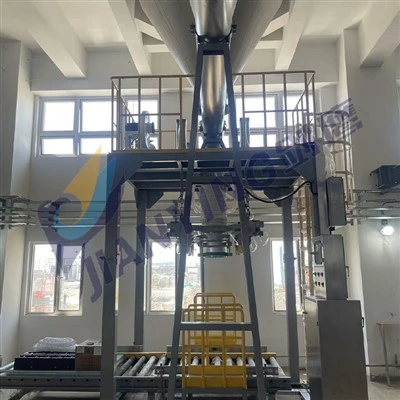
First off, let’s get one thing straight: “net weighing” doesn’t mean we’re measuring the weight of the bag first, right? Wait, actually, yeah—sort of. It’s not the old “gross weight” method where you dump product into a bag hanging on a scale and hope the bag itself doesn’t throw off the number. Net weighing means we’re accounting for the bag’s weight the entire time so we only measure what’s inside, hence net (product only) weight. That’s foundational, because every part of the loading mechanism ties back to that.
Let’s walk through the process step by step, starting from when an empty bag hits the line. Most people think the bag loading mechanism starts with the product hopper, but no—it starts with the bag itself being prepared. Our machines connect to standard open-mouth bags (poly, woven polypropylene, whatever your product uses) and hold them open with those little spring-loaded or pneumatic grippers—we call them “bag neck jaws” on our line, not fancy terms, just descriptive. These jaws lock onto the top edge of the bag, stretch it just enough to keep the mouth wide open, and lower it so the bottom of the bag is positioned directly under the discharge spout of the weighing hopper. The last thing you want is a bag half-crumped on the spout, leading to product spilling out the sides mid-fill. A lot of cheap baggers skip the adjustable jaw spacing, which is a nightmare if you switch between, say, 20lb pet food bags and 50lb grain sacks—you need jaws that can adapt without tool changes, which is a small detail that makes all the difference.
Next comes the actual weighing part, which feeds directly into the loading mechanism. Wait, hold on—before product even touches the bag, we’ve already weighed it. That’s how net weighing works, remember? The core of the net weighing system is a precision load cell inside the main weighing hopper, separate from the rest of the machine frame to avoid vibration throwing off the numbers. This hopper is empty when we start a cycle, right? First, we do a “tare” check? No, wait—tare is when we zero the scale, but since we’re measuring net product, we tare the scale with the empty weighing hopper first. Then, we open the gate to the smaller “filler hopper” above the main hopper, which is already pre-measured to almost the target weight. We split the fill into two phases: a “fast fill” and a “dribble fill.” Fast fill is 90% of the product, dumped quickly to get close to the target without wasting time, and then we slow way down for the last 1-5%—that’s the critical part to avoid overfilling. Overfilling is the #1 waste source on these lines, and the dribble phase cuts that by like 95% compared to manual filling.
Now, when the main hopper hits the exact target weight (give or take a tiny tolerance we set per product—we usually set it at ±0.2oz for agricultural stuff, ±0.1oz for fine powder like flour), that’s when the loading part kicks in to move that product from the weighing hopper into the bag. Wait, how do we get it from point A to point B without spilling? The discharge spout isn’t just a straight tube—most of our baggers have a flexible, chute-like spout that extends down into the bag’s mouth as the jaws lower. That way, when we open the gate between the weighing hopper and the spout, product flows straight down into the bag instead of splattering on the sides. Some machines use a pneumatic gate to open and close the hopper, which is way faster than manual or even electric gates—no lag, so we can get through 600+ bags an hour without errors.
But here’s a step most people miss: once the product is in the bag, we don’t just yank the bag away. The loading mechanism has a “settling” phase. After the gate closes, we vibrate the bag gently for 1-2 seconds—those are low-frequency, controlled vibrations, not the harsh shake that would spill product out the top. This settles the product evenly, gets rid of any air pockets, so the bag isn’t lumpy or underfilled if the product settles later. For fine powders, we might add a little air purge? Wait, no, that’s more for dust control, but the vibration is non-negotiable. A lot of competitors skip the settling step to save money, and their customers end up with 5lb bags that weigh 4lb if they sit on a pallet for a week as powder settles. We see that all the time when we service machines—people bought cheap baggers, then they have to run a second check after filling because weights are all over the place.
Wait, also, what about when you switch between different products or bag sizes? That’s where the loading mechanism’s adjustability comes in. Let’s say a farmer was filling 50lb corn bags last week, and now they need to fill 20lb sunflower seed bags. On our bagger, we don’t need to reset any hardware—we just plug in a new recipe on the HMI (human-machine interface, which is just a touchscreen we make super simple, no engineering degree required). The jaw spacing adjusts automatically, the fill speed and tolerance change, the spout length retracts or extends to match the new bag size. That’s a huge part of the loading mechanism that people don’t talk about—its adaptability. If the loading mechanism can’t adjust to different bag sizes or product types, it’s only good for one job, which is a waste of money.
Oh, and let’s not forget the safety and anti-jam features, because I’ve had way too many customers call at 2 a.m. because their bag loader jammed and shut down their entire line. Our loading mechanism has little sensors—photo eyes that check if the bag is seated correctly in the jaws, weight sensors that make sure the fill didn’t overshoot, even jam sensors that stop the machine before product backs up and clogs the works. If something’s off, it flashes a simple error code on the screen—like “Bag Not Seated” or “Overfill” instead of a bunch of technical gibberish. That’s the stuff that keeps lines running, not just the technical parts.
Wait, let’s address a common misconception: a lot of people think net weighing is less accurate than a gravimetric filler, but that’s only true if the bag loading mechanism is garbage. The load cells we use are calibrated to within 0.05% accuracy, way more precise than most manual scales, and the two-phase fill and settling process means almost no variation between bags. We did a test last year with a feed mill customer—they were using manual labor that averaged ±2oz per 50lb bag, and after switching to our bagger, their average variation was ±0.08oz. That’s not a gimmick, that’s actual money saved—they stopped giving away 4oz of product per bag to every customer, which added up to like $12,000 a month in savings.
Let’s recap the whole cycle of the bag loading mechanism to make it stick, like a step-by-step checklist:
- Empty open-mouth bag is fed into position, jaws lock onto the bag’s neck, stretching it open and lowering it to align with the discharge spout.
- Weighing hopper is tared (zeroed) to account for the hopper’s own weight, then filled with pre-measured product in fast fill phase to get within 5% of target weight.
- Dribble fill phase slows the flow to precise speed, until load cell registers exact net target weight, then gate between hopper and spout closes.
- Flexible spout retracts slightly, and the loading mechanism activates gentle vibration to settle product, eliminate air pockets, and ensure even distribution.
- Jaws unlock, and the filled bag is either conveyed to the sealing station or held for a quick check before moving on, while the mechanism resets for the next empty bag.
Wait, is there anything I missed? Oh, dust and spillage control, which is part of the loading mechanism too. A lot of products—powders, fertilizer, pet food—create dust when filled, which is bad for workers and bad for the machine. Our loading mechanism has a small dust collection port right at the spout, that pulls in any loose dust instead of letting it float around the plant. We designed that into the loading part, not as an add-on, because we know dust buildup is a #1 cause of machine breakdowns. Competitors usually make dust collection a $2,000 extra, which is ridiculous—we include it standard because it’s part of how the loading mechanism works.
Now, why does this matter to you, whether you’re a farm, a feed mill, a construction company, anyone filling bags of bulk product? The bag loading mechanism is the heart of the entire bagger. It’s not the flashy part (that’s usually the fancy HMI, or the sealing station), but if it’s built cheap, you’ll deal with constant downtime, inaccurate weights, tons of product waste, and frustrated line operators. I’ve seen so many businesses sink money into a cheap bagger that breaks every other week, when they could have spent a little more on a machine with a solid, well-designed loading mechanism that runs for years with minimal maintenance.
Speaking of maintenance—another common question: how do you keep the loading mechanism working? It’s actually super simple. Every week, wipe down the jaws to get rid of any product residue, make sure the pneumatic lines aren’t leaking, and calibrate the load cell once a month. Most issues are from not keeping it clean, not from the mechanism itself being poorly built. We send a quick video guide to every customer, so they don’t have to guess.
If you’re in the market for a net weighing bagger, you’re probably dealing with line bottlenecks, product waste, or accuracy issues that are costing you money. You don’t need a fancy machine with 100 features you’ll never use—you need one with a reliable, precise bag loading mechanism that gets the job done without the headaches. We’ve installed hundreds of these, from small family farms running 100 bags an hour to large distribution centers running 800+ an hour, and every single one comes with that same core loading design that’s stood the test of time.

If you’re tired of dealing with baggers that jam, give inconsistent weights, or waste more product than they fill, reach out to us to chat about what your specific needs are. We don’t do pushy sales calls—we just walk through what your line requires, show you how our loading mechanism would work for your product and bag sizes, and give you a clear quote. No hidden fees, no fine print, just machines that work when you need them to.
Net Weighing Bagger Now, references:
- Packaging Machinery Association. (2021). Net Weighing Bagger Design and Operational Best Practices.
- Industrial Equipment News. (2022). Core Mechanisms of Automated Bagging Systems for Bulk Materials.
- Journal of Manufacturing Processes. (2020). Accuracy and Efficiency of Two-Phase Fill Systems for Bulk Product Packaging.
- Agricultural Processing Equipment Guide. (2023). Loading Mechanism Design for Agricultural Bagging Applications.
Wuxi Jianying Intelligent Equipment Co., Ltd.
We are one of the most professional net weighing bagger manufacturers and suppliers in China, featured by quality products and good price. Please rest assured to buy durable net weighing bagger for sale here from our factory. Welcome to contact us for custom service and OEM service.
Address: No.88, Xinyang Road, Ehu Town, Xishan District, Wuxi City, Jiangsu Province, P.R.China
E-mail: wuxijianying@163.com
WebSite: https://www.wuxijianying.com/
