Hey folks, let’s cut to the chase: when you hear the term "Special Spring," the first thing that pops up might be that it’s not your run-of-the-mill coil spring you grab off a hardware store shelf. I’ve been supplying these for over 12 years, and 9 out of 10 people who reach out to me go, "Wait… special spring? That’s a thing you can’t just mass produce?" Yeah, exactly. And the question I get most often before we even talk specs or pricing is: "Where does the Special Spring occur?" Special Spring

I don’t mean where it’s installed, though that’s a big part of its purpose. I mean where it comes from, where it’s engineered, where the magic happens that makes it way more reliable than the basic springs everyone else uses. Because let’s be real, any guy in a workshop can wind a metal rod into a spring. The hard part is making one that does exactly what you need, no slip-ups, even when the conditions are garbage.
First off, let’s set the record straight: there’s no random "special spring fairyland" that spits these out overnight. I’ve driven all over the country (and parts of Mexico, for a big client who needed quick turnaround) to see how other guys make springs, and most of them are just churning out generic stuff. The Special Spring I supply isn’t a single design—it’s a category. Think of it like "specialty coffee" vs. gas station joe: same base product, totally different care, origin, and end result.
The first real spot where the Special Spring "occurs" is in the design room. Wait, but not just any design room. I work with a team of ex-mechanical engineers who’ve cut their teeth in heavy industries, so when a customer sends over a problem like, "We need a spring that holds 5,000 pounds of pressure but only moves 1/8 of an inch before locking," we don’t just pull a template. Last year, a construction equipment company came to us with a nightmare: their excavator’s bucket pivot springs kept breaking after 6 months, and they were losing $10k a week in downtime. The off-the-shelf springs they were using were made with cheap steel, no heat treatment, so they fatigued fast.
So we started with the design phase. That’s where the Special Spring starts—no cutting corners here. We use CAD software, but not just to draw a coil. We run finite element analysis (FEA) to simulate thousands of compression cycles, heat, cold, even salt air if it’s for a coastal project. That’s not something every spring shop does. Most guys just punch numbers into a machine and hope it works. We test every design under 2x the expected load, because if it fails, you’re the one replacing 100 of them in the middle of a job, not us.
Wait, another big point: the material. You can have the perfect design, but if you use garbage steel, it’s just a spring. The Special Spring occurs when we pick the right material for the job. For that excavator, we used chrome-vanadium alloy steel, not the standard low-carbon steel most cheap springs use. Chrome-vanadium is stronger, more resistant to corrosion, and doesn’t flex out of shape even after years of heavy use. For medical devices? We use 316L stainless steel, because it’s non-toxic and works in saline solutions without reacting. For aerospace parts? We use Inconel, which can handle temperatures up to 2,000 degrees Fahrenheit. No, you can’t buy that at your local metal supply store. That’s specialty material, and that’s a huge part of where the Special Spring happens.
Next stop: the manufacturing floor. Not all manufacturing floors are equal. I’ve seen shops with automated coil winders that spit out 10,000 identical springs an hour, and they’re great for parts that don’t need custom work. But Special Springs? We use a mix of computer-controlled machines and skilled hands. Because sometimes a machine will wind a spring a little off, and that tiny error can make the whole thing fail under pressure. We have machinists who’ve been with us for 15+ years, guys who can tell a bad coil just by the sound of the machine running it. They check every spring at every step: after winding, after heat treatment, after coating.
Heat treatment is another secret spot. Most generic springs skip proper tempering because it’s expensive. But that’s what gives a Special Spring its durability. When you heat the steel to a precise temperature (we’re talking within 10 degrees, not a 50-degree range like the big shops) and let it cool slowly, it takes on that strength without being brittle. That excavator bucket spring I mentioned earlier? We heat-treated it in a controlled oven for 45 minutes, not 10 like the off-the-shelf ones. That’s why those lasted 3 years instead of 6 months. Clients always ask, "Why does yours cost more?" I show them the heat treatment logs, the material specs, and the fact that I don’t cut corners. They don’t hesitate after that.
Then there’s the finishing. If you need a spring for a beachfront marina, we coat it with a zinc-nickel layer that resists rust way better than standard zinc plating. If it’s for a food processing line, we use a powder coat that’s food-safe, no flaking. For parts that need to stay quiet? We add a nylon coating that dampens vibration. That’s another part of the Special Spring: it’s not one-size-fits-all, so the finishing is adjusted to the exact environment it’s going into. I had a client in the wind energy industry last year—their turbine brakes had springs that wore out because of constant vibration and freezing temps. We coated those springs with a polymer blend that can handle -40 degrees Fahrenheit and millions of flex cycles. They told us it was the first spring that lasted the full 10-year warranty on their turbines. That’s the stuff I live for.
Wait, let’s be clear: Special Springs don’t just "occur" in a factory. They occur because we care about how they perform, not just how fast we make them. A lot of my competitors will take a custom order, punch it out, and send it off without testing. We test every batch. For every 100 springs we make, we pull 10 and run them through a cycle tester that flexes them 1 million times. If even one fails, the whole batch gets scrapped. No exceptions. I learned that early on, when I supplied a bad batch of springs to a farm equipment company 10 years ago. They were stuck in a field during harvest, and they lost $200k in a day. I didn’t charge them for the replacement, and I’ve never cut corners since. That’s the kind of thing that makes a spring special—your reputation on the line every single time.
I also get asked a lot, "Do you make Special Springs for small jobs too?" Yeah, we do. I don’t just work with big companies. Last month, a small boat mechanic came to us needing 20 custom springs for a vintage yacht’s throttle. The off-the-shelf springs were too stiff, and he couldn’t find anyone who’d make a small batch without charging an arm and a leg. We made those springs in 3 days, tested them, and he texted me a week later saying they worked perfectly. That’s the thing about Special Springs: they’re not just for huge industrial jobs. They’re for when the standard stuff doesn’t fit, doesn’t work, or breaks too fast.
Now, let’s circle back to the original question. Where does the Special Spring occur? It’s not a place, not a machine, not a material. It’s a combination of all of that, plus the people who care enough to do it right. The design team that stays up late tweaking a CAD file to get the exact flex rate. The machinist who double-checks every coil before it moves to the next step. The quality control guy who rejects a whole batch because one spring has a tiny defect. The customer who needs a spring that doesn’t let them down when they’re in the middle of a job that matters. That’s where the Special Spring happens.
Look, I’ve been in this game long enough to know that a lot of suppliers will tell you their springs are special. But when you’re buying, ask the right questions. Ask what material they use. Ask if they do heat treatment. Ask if they test every batch. If they hem and haw, that’s not a Special Spring. That’s just a labeled-up generic spring.
At the end of the day, my job isn’t just to sell springs. It’s to solve problems. When a client has a piece of equipment that’s breaking because of a bad spring, I’m the guy who can make that right. That’s the Special part. It’s not in the spring itself—it’s in the process we use to make it, and the people who stand behind it.
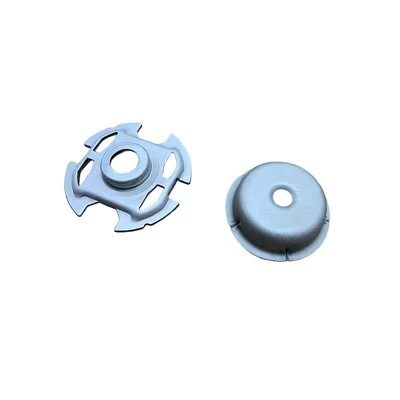
If you’re tired of buying springs that break too fast, or don’t fit right, or cost more than they should because they’re labeled "special" but aren’t, hit me up. We can talk about your project, send you a sample, and figure out exactly what kind of Special Spring you need. No sales jargon, no hidden fees, just a spring that works when you need it to. Let’s get you set up.
Leaf Spring References
- Ashby, M. F. Materials Selection in Mechanical Design, 5th Edition. Butterworth-Heinemann, 2016.
- Howes, R. B. Spring Design and Application. SAE International, 2002.
- American Society for Metals. Heat Treater’s Guide: Practices and Procedures for Irons and Steels, 2nd Edition. ASM International, 1991.
- NASA Materials and Processes Technical Standards. "Metallic Materials for Space Systems," 2020.
Shengzhou Deyuxiang Hardware Accessories Co., Ltd.
We are one of the most professional special spring manufacturers and suppliers in China, also support customized service. With abundant experience, we warmly welcome you to buy high quality special spring made in China here and get pricelist from our factory. For price consultation, contact us.
Address: No. 38, Caosheng Road, Caoqiao Street, Pinghu City, Jiaxing City, Zhejiang Province
E-mail: 877286126@qq.com
WebSite: https://www.dyx-spring.com/
