If you’ve ever stood in a warehouse aisle, staring at stacks of bright steel pipe and wondering why one roll looks thicker than the next, you’re not alone. For years, I’ve sat across from engineers, contractors, and even hobbyists who ask me the same question: “How do I know the right wall thickness for my project?” As a bright steel pipe supplier with over 15 years in this game, I can tell you it’s not just a guess—it’s a mix of science, context, and a little bit of experience that’s shaped how I guide every customer. Back when I first started, I’d often recommend a “one-size-fits-all” approach, only to get a call a few weeks later saying a pipe had bent under pressure or corroded faster than expected. That mistake taught me that wall thickness isn’t just a number stamped on a pipe—it’s the backbone of how bright steel performs in any application. Today, I walk customers through a straightforward process, and I want to share it with you here. Bright Steel Pipe

First, let’s ground this in what bright steel pipe actually is, because its unique properties matter when picking a wall thickness. Unlike standard black steel pipe, bright steel is cold-drawn, which means it’s pulled through a die to get a smooth, shiny finish, tighter dimensional tolerances, and higher tensile strength than hot-rolled steel. That doesn’t mean it’s indestructible, though—its strength depends a lot on how thick the wall is. Think of it like a soda can: a thin-walled can crumples if you squeeze too hard, while a thicker-walled aluminum cylinder stays rigid. Bright steel works the same way, but for things far more serious than holding fizz.
The first step in determining the right wall thickness is figuring out the load your pipe will carry. This is non-negotiable, and it’s where most people go wrong if they skip the basics. Load breaks down into two main types: static and dynamic. Static load is the constant weight that sits on or through the pipe—think of a structural frame for a warehouse roof, or a pipe carrying water at a steady pressure. Dynamic load is the shifting weight: a pipe used in a truck’s hydraulic system that jostles on rough roads, or a support for a playground swing set that gets hit repeatedly by kids. For static loads, you need to calculate the minimum wall thickness that can resist bending or buckling under that constant weight. For dynamic loads, you have to add a safety factor, because repeated stress can cause fatigue even if the static load is low.
Let’s use an example that comes up all the time in my line of work. A few months ago, a customer called me needing bright steel pipe for a conveyor frame in a local manufacturing plant. The conveyor would carry 500-pound crates along a flat path, so static load seemed straightforward. But when I asked about dynamic load, he mentioned the crates start and stop 12 times a minute, every hour of the day. That meant dynamic stress was a real risk. We ran the numbers, and instead of a 1.5mm wall thickness he initially asked for, we went with 2mm. The extra thickness added just a tiny bit to the total cost, but it meant the pipe wouldn’t crack from repeated bending after a month of use. That’s the tradeoff here: skimping on wall thickness to save a few bucks leads to expensive downtime, while over-engineering wastes money on material you don’t need.
Next, you have to consider the environment the pipe will live in. Bright steel’s smooth finish makes it resistant to corrosion better than black steel, but it’s not immune. If the pipe is going to be outdoors, exposed to rain, snow, or salt air from a coastal area, that changes everything. Thin-walled pipe might look fine at first, but over time, corrosion eats away at the inner and outer walls, reducing thickness until it can’t hold the load. I had another customer a couple years back who used thin bright steel pipe for a fence in Florida—salt air corroded the 1mm wall down to 0.7mm in six months, and half the fence posts bent. If he’d used a 1.8mm wall, the corrosion rate would have been slow enough that the pipe would last 10+ years. Environment also includes temperature: if the pipe is carrying hot fluids, like in a boiler system, higher temperatures weaken steel’s tensile strength. So a pipe that works at room temperature might need a thicker wall when it’s exposed to 200-degree water.
Then there’s the type of fluid or material the pipe will transport, if it’s not just a structural component. For fluid applications—water, oil, gas, or even chemicals—wall thickness is tied to pressure. The formula here is simple enough for most people to use, even if you’re not an engineer: the minimum wall thickness for pressure is (P × D) / (2 × S × F), where P is the internal pressure, D is the outer diameter, S is the steel’s tensile strength, and F is the safety factor (usually 4 or 5 for bright steel). Let’s say you need a pipe to carry water at 100 PSI, with an outer diameter of 50mm. Bright steel has a tensile strength of around 410 MPa, so plugging in the numbers: (100 PSI × 50mm) / (2 × 410 MPa × 4) = roughly 0.15mm. Wait, that’s way thinner than standard pipe—so why do we use a thicker wall? Because that formula doesn’t account for rough handling during installation, or minor pressure spikes when a valve opens suddenly. That’s where the safety factor comes in, and why I always recommend a little extra thickness, even if the math says you can get away with less.
I also can’t talk about wall thickness without mentioning dimensional standards. Bright steel pipe is made to specific standards, like ASTM A513, which sets tolerances for wall thickness, outer diameter, and straightness. If you pick a wall thickness that’s not a standard size, you might end up with inconsistent performance—one section of pipe could be slightly thinner than another, leading to uneven load distribution. Standard wall thicknesses for bright steel usually range from 0.5mm to 6mm, depending on the outer diameter. For smaller pipes (under 25mm outer diameter), common wall thicknesses are 0.8mm, 1.0mm, and 1.2mm. For larger pipes (over 50mm outer diameter), you’ll see 1.5mm, 2.0mm, and 2.5mm as standard. Sticking to these sizes means you don’t have to wait for custom orders, which saves time, and the pipe will perform as intended because it’s designed to meet industry specs.
One thing I always emphasize with customers is that custom applications often need a bit of extra consultation. Last year, a small engineering firm came to me with a project for a medical device—they needed bright steel pipe for a part of a surgical robot that would bend repeatedly. The outer diameter was only 8mm, so standard wall thicknesses were either too thin (0.8mm, which would bend too much) or too thick (1.5mm, which was too rigid for the movement). We worked with a local machine shop to get a custom 1.0mm wall, which was just right. But that’s a case where you can’t just follow a formula—you have to account for the unique movement of the part, and even then, we tested three prototypes to make sure it would hold up. For most projects, though, the standard process works: calculate load, assess environment, check pressure if needed, stick to standard sizes, and add a small safety buffer.
I’ve also learned over the years that many customers overlook installation-related factors. If you’re cutting pipe to length, or threading it, a thin wall can deform or crack during machining. For example, if you’re going to thread the ends of a pipe to connect it to fittings, you need at least 1.5mm wall thickness for pipes over 40mm outer diameter—thinner walls will split when you tap them. Handling during installation also matters: a thin-walled pipe might dent if it’s dropped, which weakens it. So even if the load and environment say a thinner wall is okay, think about how you’ll get it into place. Dents, burrs, or rough cuts reduce effective wall thickness, so you have to account for that when making your choice.
Let’s circle back to the real-world examples I mentioned earlier, because they tie all this together. The conveyor frame customer: we calculated static load, added dynamic load from starting and stopping, accounted for a factory environment with occasional humidity, and went with a 2mm wall thickness. Six months later, he sent me a photo of the conveyor running smoothly, no bends, no cracks. The fence customer: he skipped environment, used 1mm wall for coastal Florida, and had to replace half the fence in six months. The medical device team: they worked with me to get a custom wall that fit their unique movement, and their robot is now used in hospitals across the country. All of these cases came down to one thing: not just picking a wall thickness, but understanding all the variables that affect how bright steel pipe performs.
At the end of the day, there’s no universal right wall thickness—what works for a fence won’t work for a hydraulic line, and what works indoors won’t work outdoors. The key is to break down your project into its core components: load, environment, pressure, installation, and standards. If you’re not sure how to do that, that’s exactly what I’m here for. As a bright steel pipe supplier, my job isn’t just to sell you a pipe—it’s to make sure you get the right one, so your project works as intended, on time, and on budget. I’ve seen too many people cut corners on wall thickness and end up with bigger problems later, and I don’t want that for you. Whether you’re a small contractor working on a residential deck, a large engineer designing industrial equipment, or a hobbyist building something in your garage, taking the time to figure out the right wall thickness will save you frustration, money, and time in the long run.
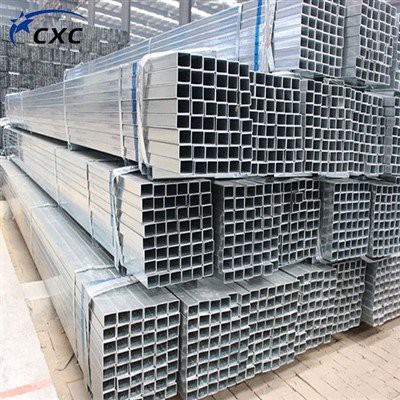
If you’re in the market for bright steel pipe and want to get the right wall thickness for your specific application, don’t hesitate to reach out to discuss your needs. We can walk through your project together, answer any questions you have, and help you pick a pipe that will perform as expected.
Cold Formed Steel Sections References
ASTM A513, Standard Specification for Electric-Resistance-Welded Carbon Steel Mechanical Tubing, ASTM International.
Hall, R. (2019). Mechanical Design of Tubular Structures: Load, Stress, and Wall Thickness Selection. Industrial Press.
National Association of Pipe Manufacturers (2021). Bright Steel Pipe Application Guide: Sizing, Environment, and Installation Considerations. NAPM Publications.
ASME B31.1, Power Piping Code, American Society of Mechanical Engineers.
Wuxi Chengxingchuang Metal Products Co., Ltd.
As one of the most professional bright steel pipe manufacturers and suppliers in China, we’re featured by quality products and good price. Please rest assured to buy cheap bright steel pipe for sale here from our factory. Customized orders are welcome.
Address: No. 8-2, Zhoujia Lane, Liangxi District, Wuxi City, Jiangsu Province, China
E-mail: 13961862735@163.com
WebSite: https://www.cxcsteeltube.com/
