If you’ve ever walked the floor of a heavy industry manufacturing plant, stood beside a galvanizing line that hums with controlled power, or watched a battery production facility churn out cells at a consistent, reliable rate, you’ve likely seen a rectifier transformer at work. As a supplier who’s spent the last 18 years designing, building, and troubleshooting these critical components, I can tell you that choosing the right one isn’t just a technical detail—it’s the difference between a line running smoothly for 20 years and one facing unplanned downtime that costs tens of thousands of dollars in lost output. Too many operators default to the cheapest unit they can find, only to learn too late that a mismatched rectifier transformer doesn’t just underperform—it creates safety risks, wastes energy, and shortens the lifespan of every piece of equipment it powers. Today, I’m breaking down the key factors to weigh when choosing a rectifier transformer, drawing on stories from the field and the real-world data that has shaped how our team builds every unit. Rectifier Transformer
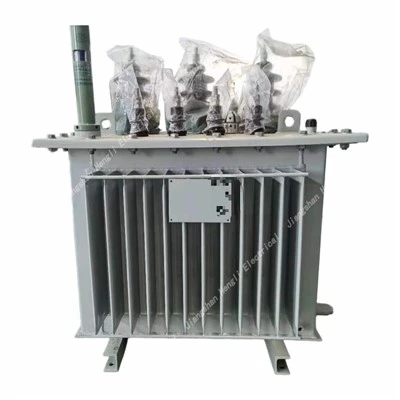
First, and most foundational, is matching the transformer’s output specifications to your rectifier’s load requirements. It sounds simple, but this is where 60% of the mistakes I see happen. A common example comes from a steel mill I worked with in Ohio back in 2019. They upgraded their galvanizing line’s rectifier to a newer, higher-efficiency model but kept their old 12-pulse rectifier transformer, assuming the voltage and current ratings would line up. The old transformer was rated for 1,200 kV and 10,000 amps, while the new rectifier required 1,150 kV and 11,000 amps. For six months, the mill ran the unit at a slight overload, and while it kept production moving, the transformer’s cooling system worked overtime, leading to a 25% increase in maintenance costs and a 10-year reduction in its expected lifespan. The fix? A quick recalculation of the rectifier’s actual continuous and peak loads, plus accounting for a 10-15% overhead buffer. This buffer isn’t a scam to upsell you—it’s built to handle unexpected surges, like when a production line ramps up after a shutdown, or when ambient temperatures rise in summer months, reducing the transformer’s effective cooling capacity. Don’t just look at the nameplate rating on your current rectifier; pull the operation manual and cross-reference it with the manufacturer’s load curve for your specific line. Our team always sends a free load analysis for prospective clients, because we know that getting this step right is non-negotiable.
Next, rectifier type dictates the transformer’s design, and mixing and matching here is a fast track to poor performance. There are two primary rectifier configurations: 6-pulse and 12-pulse, and your transformer has to be built to complement the rectifier’s pulse count. A 6-pulse rectifier draws uneven current from the grid, creating harmonic distortion that can damage nearby equipment and trigger utility fines for power quality issues. A 12-pulse rectifier, by contrast, uses two secondary windings wired in a delta-wye configuration, which cancels out most lower-order harmonics. But that delta-wye winding setup requires a custom transformer design, not a off-the-shelf unit. I learned this lesson early in my career, when a small aluminum extrusion shop came to us frustrated that their new 12-pulse rectifier was still facing harmonic fines from their local utility. We did an on-site audit and found they’d paired it with a standard 6-pulse transformer, which only made the harmonic problem worse. The right transformer for a 12-pulse rectifier has a phase-shifting secondary winding—usually 30 degrees between the two windings—that aligns perfectly with the rectifier’s pulse count. Skipping this step means you’re not getting the full efficiency benefits of a 12-pulse system, and you’re leaving yourself open to unplanned costs. When you talk to a supplier, ask them to explain how their transformer’s winding design matches your rectifier’s pulse configuration. If they can’t walk you through that, walk away.
Cooling system design is another make-or-break factor that’s often overlooked until a transformer overheats. Rectifier transformers run hot—they’re converting high-voltage alternating current (AC) to low-voltage direct current (DC) for industrial processes, which generates significant heat that has to be managed. There are four main cooling types, and the right one for your operation depends on two things: your ambient temperature range and the size of your facility. For small, indoor operations like a 500 kVA battery charging station, air-cooled transformers are fine—they’re cheaper, easier to install, and work well in controlled environments. But for a outdoor smelting operation in Arizona, where summer temperatures regularly hit 110°F, air-cooled units will cycle on and off too frequently, leading to wear on the cooling fans and higher energy costs. Water-cooled transformers, by contrast, use a closed-loop water system to dissipate heat, which is more efficient for high-load, high-temperature environments. The steel mill I mentioned earlier upgraded their cooling system alongside their transformer and saw a 18% drop in energy use for temperature control, not to mention fewer maintenance callbacks. Another option is oil-immersed cooling, which is popular for large, heavy-duty transformers because oil has a higher heat capacity than air, and it also insulates the internal windings. We always ask prospective clients for their site’s average and maximum ambient temperatures, plus the size of the transformer enclosure, to recommend the right cooling system. Cutting corners here can lead to a transformer that trips on overload during peak production, costing you thousands of dollars in downtime.
Harmonic mitigation is tied to both your rectifier type and the transformer’s design, but it’s worth calling out as a separate consideration because of the real costs it incurs. Harmonics are distorted electrical waves caused by non-linear loads like rectifiers, and they can damage everything from nearby motors and pumps to utility meters and communication systems. Many operators don’t realize their transformer is adding to the harmonic problem until they get a fine from their power company. The key here is to look for transformers that have built-in harmonic filtering features, whether that’s a 12-pulse winding configuration, a tuned harmonic reactor, or a shielded primary winding that reduces the flow of distorted current back to the grid. A quick example: a automotive parts plant we worked with in Detroit had three old 6-pulse rectifier transformers that were drawing enough harmonics to cause flickering lights across their entire production floor, and their utility charged them an extra $12,000 a year in power quality fees. When we replaced each 6-pulse unit with a custom 12-pulse transformer with integrated harmonic tuning, those fees dropped to less than $1,000 a year, and they also saw a 5% improvement in motor lifespan across the plant. If your operation has multiple rectifiers running in parallel, a supplier can also design a multi-transformer system that coordinates harmonic cancellation across all units, which is more efficient than adding external harmonic filters.
Regulatory and safety standards are non-negotiable, and not all rectifier transformers are built to meet the same requirements. Depending on where your facility is located, you’ll need to comply with standards like IEC 61378 (for converter transformers) in Europe, ANSI/IEEE C57 in North America, or local industrial safety codes in regions like Southeast Asia or Australia. Beyond regional standards, there are process-specific safety requirements. For example, transformers used in explosive environments like petroleum refineries or chemical processing plants need to be explosion-proof, with sealed enclosures that prevent arcing from igniting flammable gases. Another example: transformers used in food and beverage processing must meet hygiene standards, with non-toxic insulation materials that won’t contaminate products if there’s a leak. I’ve seen suppliers cut corners here, using generic off-the-shelf transformers that don’t meet local codes, which leads to facilities being shut down during inspections. When vetting a supplier, ask for copies of their transformer test reports and certification documents to confirm they meet the standards applicable to your site. Never take a supplier’s word for it—ask for the hard copies.
Total cost of ownership (TCO) is the final piece of the puzzle, and it’s the only way to avoid the common trap of choosing the cheapest transformer upfront. The initial price of a rectifier transformer is only 20-30% of its total cost over its 20+ year lifespan. The rest comes from energy costs, maintenance, downtime, and replacement parts. A cheap, off-the-shelf transformer might cost 15% less than a custom unit, but it could have 10% lower efficiency, leading to thousands of dollars in extra energy bills every year. It might also require more frequent maintenance, with parts that are harder to source, and it might have a shorter lifespan, meaning you’ll have to replace it in 12 years instead of 20. We recently did a TCO analysis for a small foundry that was comparing two transformer options: a $45,000 off-the-shelf unit and a $52,000 custom unit. Over 20 years, the off-the-shelf unit would cost $18,000 in extra energy, $12,000 in extra maintenance, and it would need to be replaced once, adding $45,000 to the total. The custom unit, by contrast, would cost $9,000 in extra energy, $5,000 in maintenance, and would last the full 20 years. The total TCO? $120,000 for the off-the-shelf unit, $66,000 for the custom unit. The initial price difference was $7,000, but the TCO difference was $54,000. That’s why we always present TCO calculations to prospective clients, not just upfront quotes—we want them to see the real value in a properly matched, high-quality transformer.
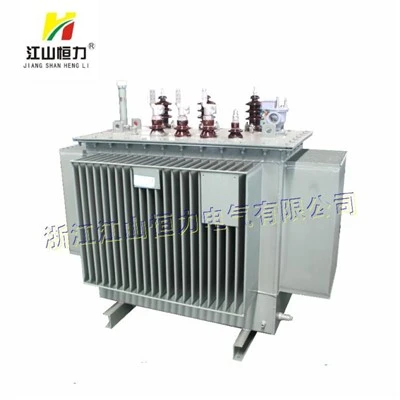
At the end of the day, choosing a rectifier transformer is about partnering with a supplier who understands your specific process, not just selling you a unit from a catalog. Every operation has unique needs: a battery plant running 24/7 has different requirements than a custom metal fabrication shop that runs one shift a day. A supplier who takes the time to do an on-site audit, review your load data, talk to your maintenance team, and understand your long-term growth plans is going to give you a transformer that works for you, not just one that fits the spec sheet. If you’re in the market for a rectifier transformer, don’t settle for a one-size-fits-all solution. Reach out to our team to discuss your needs, and we’ll conduct a free, no-obligation analysis to recommend the right transformer for your operation. We’ve built our reputation on solving real problems for industrial operators, and we’re ready to do the same for you.
Single Phase Pole Mounted Transformer References
- IEEE Std C57.12.00-2020, Standard for General Requirements for Liquid-Immersed Distribution, Power, and Regulating Transformers
- IEC 61378-1:2017, Converter Transformers – Part 1: Transformers for industrial applications
- Industrial Power System Harmonics: Causes, Effects, and Mitigation, IEEE Press, 2018
- Rectifier Transformer Application Guide, National Electrical Manufacturers Association (NEMA), 2021
- Total Cost of Ownership for Industrial Electrical Equipment, Manufacturing Extension Partnership (MEP), 2020
Zhejiang Jiangshan Hengli Electrical Co., Ltd.
Zhejiang Jiangshan Hengli Electrical Co., Ltd. is one of the most professional rectifier transformer manufacturers and suppliers in China, featured by quality products and low price. Please rest assured to wholesale cheap rectifier transformer in stock here and get pricelist from our factory. Customized orders are welcome.
Address: 212 Fuzhu Street Sidu Town, Jiangshan, Zhejiang, China
E-mail: henglijs@foxmail.com
WebSite: https://www.henlypower.com/
