As a screw chillers supplier, I get a lot of questions from our clients—manufacturers in food processing, commercial property managers, and data center operators all want to know why their chillers break down unexpectedly, or why their energy bills keep creeping up even when they’re running the equipment as scheduled. Most of the time, when we dig into root causes, it comes down to something simple: water quality. It’s not the first thing most people check when their chiller acts up, but it’s the backbone of how a water-cooled screw chiller works, and ignoring it can cost a lot more than the occasional service call. Let me break down what water quality does to these systems, based on the work we’ve done with clients over the past 12 years. Screw Chillers
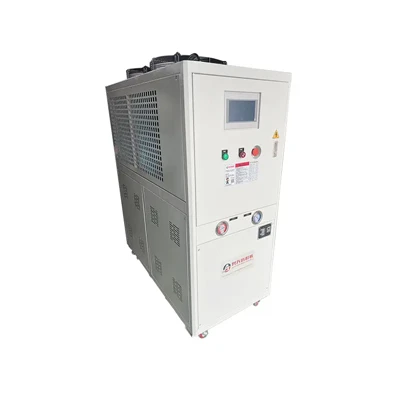
First, let’s start with the basics of a water-cooled screw chiller, so you understand why water matters here. Unlike air-cooled units that use fans to blow heat away, water-cooled screw chillers rely on a closed loop of water to absorb heat from the space being cooled, then carry that heat to a condenser where it’s released outside. The screw compressor is the heart of this: two rotating helical screws compress refrigerant, which in turn transfers heat to the water. The entire system’s efficiency depends on that water moving smoothly through pipes, heat exchangers, and the condenser—no blockages, no buildup, no corrosion slowing it down. Poor water quality disrupts every part of that process, starting right at the condenser.
I’ve seen clients install top-tier screw chillers (the same line we sell, actually) only to see their efficiency drop 15-20% within a year. When we run performance tests, the first thing we check is the shell-and-tube condenser, where the heat exchange happens. If the water circulating here isn’t treated, it leaves scale—mineral deposits like calcium and magnesium carbonate—on the tube walls. That scale acts like an insulator. Think of it like trying to cool a drink through a layer of plastic wrap instead of a metal cup: the heat can’t transfer out easily, so the compressor has to work harder to maintain the desired temperature. A client in a small textile plant had this issue two years ago; their energy bill jumped $2,800 in six months, and when we inspected the condenser, the tubes were covered in a 1.5mm layer of scale. After they did a full descale and adjusted their water treatment program, their energy use dropped right back down, and they haven’t had efficiency issues since.
It’s not just scale that’s a problem. Corrosion is another big one. If the water has high acidity (low pH) or high levels of dissolved oxygen, it eats away at the metal in the chiller’s tubes and piping. We’ve seen copper tubes develop pinhole leaks within 18 months of installation because of untreated acidic water. Those leaks don’t just cause water damage to the plant—they let air get into the system, which creates more corrosion and can lead to cavitation in the pump. Cavitation is when small bubbles form in the water stream, collapse violently, and erode metal from pump impellers. One food processing client lost a 15-horsepower pump in their chiller system because of cavitation, and the repair cost almost as much as a brand new pump. Worse, the downtime cost them over $12,000 in lost production during a peak processing season. I always tell clients: corrosion isn’t just a metal issue—it’s a production and maintenance budget issue.
Then there’s biofouling. That’s when bacteria, algae, and other microorganisms grow in the water loop, forming a slimy layer on heat exchange surfaces. It’s especially common in systems that run at temperatures between 20 and 50 degrees Celsius, which is exactly the range the condenser water in a chiller operates in. Biofouling doesn’t insulate like scale, but it does reduce heat transfer by up to 10% and also creates a food source for more aggressive organisms like sulfate-reducing bacteria, which cause corrosion too. We had a client in a commercial office building where the chiller was running, but the indoor temperatures were never consistent—some floors were too warm, some too cold. When we pulled the condenser tubes, they were covered in a dark, slimy biofilm. After flushing the loop, adding a biocide treatment, and setting up a regular monitoring schedule, their temperature uniformity improved, and the compressor’s runtime dropped by 25% because it didn’t have to work as hard to overcome the biofilm barrier.
A lot of clients ask us: “Can’t I just use tap water? It’s cheap enough.” That’s a mistake. Tap water’s mineral content varies a lot by location—hard water in rural areas, soft water with different levels of sodium in urban areas—and none of it is balanced for chiller systems. Even softened water has issues; too much sodium can accelerate corrosion in steel pipes. Distilled water, on the other hand, is too pure—it can leach copper from tubes because there’s no dissolved minerals to form a protective layer. The sweet spot is a balanced water treatment program, customized to the local water source.
What do we recommend to our clients to avoid these issues? First, baseline testing. When you install a new screw chiller, we always suggest running a full water quality test on your source water (whether that’s city tap, well water, or a cooling tower loop) before filling the system. That tells you exactly what you’re dealing with: hardness, pH, dissolved oxygen, microbial count. Second, regular monitoring. We work with clients to set up a quarterly check—testing conductivity, pH, and corrosion rates—to catch small issues before they become big ones. For systems in harsh environments (like coastal areas with salt air, which can introduce chloride into the water), we suggest bi-annual inspections to check for scale or corrosion. Third, if you’re dealing with an existing system that has already picked up scale or fouling, we do a full system flush first, then adjust your treatment program. For example, a client in a coastal port had saltwater intrusion into their cooling tower water, leading to severe corrosion. We worked with them to install a water softener and a corrosion inhibitor, and now their system has run three years without a corrosion repair, which is a record for them.
We also see a lot of clients trying to cut corners on water treatment to save money. They’ll skip a test once a quarter, or stop adding biocide because they “don’t see any slime.” But the costs of ignoring water quality add up fast. Let’s do the math: a screw chiller for a 10,000 square foot commercial space uses about 120,000 kWh a year. A 15% efficiency drop from scale or fouling adds 18,000 kWh to that bill. At $0.12 per kWh, that’s $2,160 a year in extra energy costs. Add in a pump repair at $5,000, or a condenser tube replacement at $8,000, and the cost of proper water treatment (which is usually $300-$500 a year for that size system) starts to look trivial.
Another thing we’ve noticed: the impact gets worse as chillers get larger, especially in data centers. Data centers rely on chillers to cool servers 24/7, and even a small drop in efficiency can lead to massive energy costs. We worked with a mid-sized data center client last year where their 800-ton screw chiller had a 12% efficiency loss due to biofouling. Fixing that biofouling cost $1,200 in chemicals and labor, and saved them over $15,000 a year in energy. They told us that was the best maintenance investment they’d made all year.
It’s also important to note that water quality impacts the longevity of the chiller itself. A screw chiller can last 20-25 years with proper maintenance, but if water quality is poor, that lifespan can drop to 12-15 years, or less. We’ve seen a client in a plastic manufacturing plant replace their chiller after 9 years because of a failed compressor caused by corrosion and cavitation. If they’d invested in a basic water treatment program, that chiller would have lasted at least another 10 years.
I don’t want to scare anyone—proper water management isn’t complicated, and the payoff is clear. The key is to treat water not as something you just pour into the system, but as a critical component that keeps your chiller running efficiently and reliably. For our part, as a screw chillers supplier, we don’t just sell equipment. We help clients with maintenance guidance, water quality testing recommendations, and troubleshooting when issues pop up. Whether you’re installing a new chiller or dealing with an old one that’s acting up, checking water quality should be the first step in any diagnostic.

If you’re noticing higher energy bills, inconsistent cooling, or unexpected breakdowns with your water-cooled screw chiller, we can help you assess the situation. Reach out to our team to discuss your system, get a water quality assessment, and find solutions tailored to your needs. Let’s make sure your chiller is running at its best, not costing you extra in hidden expenses.
Screw Chillers References
- ASHRAE. (2020). HVAC Water Treatment Guidelines for Commercial Systems. American Society of Heating, Refrigerating and Air-Conditioning Engineers.
- Cooling Technology Institute. (2019). Impact of Biofouling and Scale on Heat Exchanger Efficiency. CTI Journal.
- International Organization for Standardization. (2018). ISO 14903:2018 – Water Quality for Industrial Cooling Systems. ISO.
- U.S. Department of Energy. (2021). Energy Efficiency Improvements for Water-Cooled Chillers. DOE Office of Energy Efficiency & Renewable Energy.
- NACE International. (2020). Corrosion in Closed-Loop HVAC Systems: Causes and Mitigation. NACE International Publication.
Kunshan Aotianxin Machinery Co., Ltd.
We’re well-known as one of the most reliable screw chillers manufacturers in China. With abundant experience, our factory offer high quality screw chillers made in China with low price. If you have any enquiry about quotation and free sample, please feel free to email us.
Address: 550 Shengguang Road, Bacheng Town, Kunshan City, Jiangsu Province
E-mail: 1516722561@qq.com
WebSite: https://www.atxks.com/
